How to Become a UGC Creator With No Followers (Step by Step)
A beginner's path into user generated content: no audience required, just a phone, a niche and three videos that prove you can deliver.
By Nora Ellis, Affiliate Marketing & Creator Economy Writer · with Wooly Network, Creator Success · 21 October 2026 · 7 min · Creator Monetization
You can become a UGC creator with no followers because brands are not paying for your audience, they are paying for a video they can run as an ad or post themselves. Learn to film clean, well-lit, vertical footage with a clear hook, build a small portfolio of spec work, and apply to open briefs on a marketplace. Your first paid job can realistically happen inside your first month.
I know how that sounds the first time someone says it. Your gut reaction is probably "sure, but who hires a nobody." Fair. I thought the same thing before I watched a friend with 40 followers and a decent ring light book four paid videos in her second week. Nobody on the other end even checked her follower count. They watched her sample video and asked when she was free. That is the whole trick, and the rest of this guide is just the mechanics of pulling it off.
Do you need followers to become a UGC creator?
No. UGC creator work is paid per video, not per reach. Brands use your clips in their own paid ads, product pages and email, so the audience that matters is theirs, not yours. This is the single biggest difference between UGC and influencer marketing, and it is why total beginners can get paid in week one if the footage is good.
What actually gets you picked is simple: can you say a hook in a natural way, can you hold a phone steady, and can you follow a brief without arguing with it. None of that requires a single public follower.
What gear do you actually need to start making UGC?
A smartphone from the last few years, a window for natural light, and a quiet room. That covers at least 80% of beginner jobs. Add these only once you are booking consistently:
- A clip-on microphone (under $30) once you start doing talking head videos
- A small tripod or phone stand so your shots stop shaking
- A basic editing app on your phone for cuts, captions and trimming the first and last second
Skip the ring light obsession and the camera upgrade. Reviewers reward a video that looks like a real person in a real room. A studio look can actually hurt you on this kind of brief.
How do you pick a niche as a new UGC creator for beginners?
Pick two or three categories you already buy from: skincare, kitchen gadgets, pet products, apps, supplements, whatever you genuinely use. Niching down makes your pitch and portfolio read as credible instead of generic, and it lets you reuse props you already own instead of buying new ones for every spec video.
Resist picking a niche because it sounds lucrative. A believable review of a coffee product you actually drink will outperform a stiff script about a category you know nothing about, every time.
How do you make your first 3 UGC videos with no clients?
This is the part people stall on, so here is the blunt version: you make them for free, for yourself, before anyone pays you. These are called spec videos and every serious UGC creator for beginners has a small set of them.
Pick three real products you own
One skincare or beauty item, one household or kitchen item, one app or small gadget. Variety shows range without spreading you thin.
Write a tight 15 to 30 second script
Hook in the first two seconds, the problem, the product in use, one honest benefit, a simple close. No jargon, no reading off a page on camera.
Film it like a real brand would use it
Vertical, 9:16, good light, one clean take over three or four rough ones. Caption it. Keep the raw files, you may need to hand them over later.
How do you get your first UGC jobs once the videos exist?
Put your three spec videos somewhere a brand can watch them in under a minute: a simple profile page, a shared folder, or a portfolio on a marketplace that already shows your work to brands actively looking for creators. Then apply.
On Wooly Network, you create a free profile, upload your spec videos, and either apply to open briefs that brands have posted or get discovered when a brand searches by niche and platform. You can also share a private link if a brand already knows you. Creators join Wooly for free, and there is no cost to apply.
FIRST PROFILE
Your spec videos are your resume
Upload them once, apply to briefs for free, and let brands come to you by niche and platform.
Join free as a creatorWhat should a beginner UGC creator charge for the first job?
Set a modest, real number rather than guessing high and getting ignored or guessing low and resenting the work. Many beginners start in the low hundreds per video for creator channel use only, and raise the rate once they have three to five completed jobs and a review. Do not give videos away for exposure; a free product alone is a gifting arrangement, not a paid job, and the two should never be confused when you are pricing.
Once you have a few jobs behind you, read into rate structures properly rather than guessing forever. It saves you from underselling usage rights, which is where a lot of early money gets left on the table.
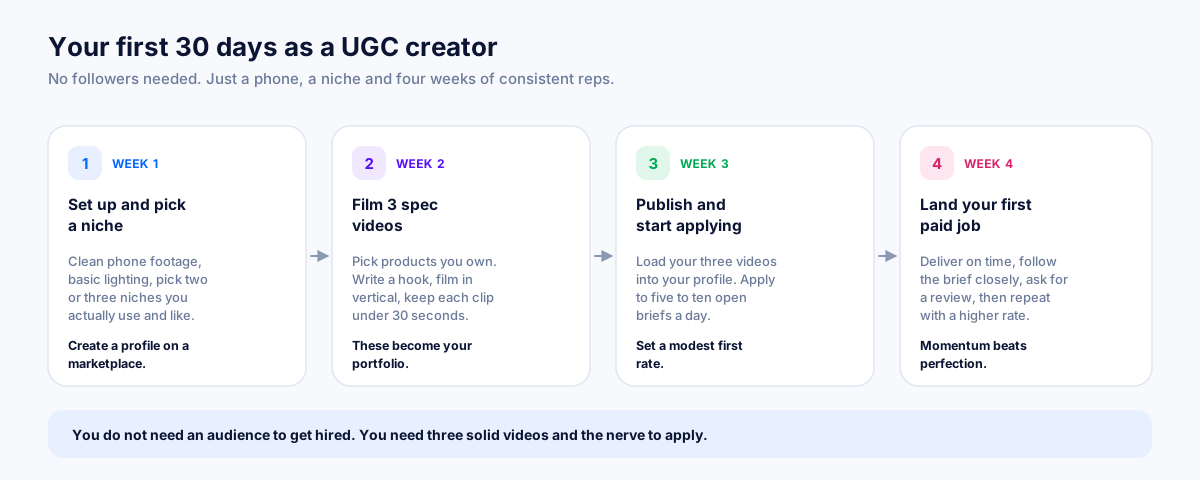
Four weeks, four simple phases: setup, spec videos, publishing, first paid job.
What does a realistic first 30 days look like?
Week one: set up a profile, pick your niche, learn your phone's camera settings. Week two: film your three spec videos. Week three: publish them and apply to five to ten open briefs a day on a marketplace. Week four: land and deliver your first paid job, ask for a review, and raise your rate slightly for the next one.
This is not a guarantee, it is a pace that is realistic for someone who shows up daily. Some people move faster, some slower. The variable that matters most is how many briefs you actually apply to, not talent.
How do the five ways brands hire creators affect a beginner?
Most beginners picture UGC as one kind of job, but a marketplace like Wooly actually offers five different formats, and knowing them helps you apply to the right ones first. A One Time Job, a single video paid once the work is approved, is the easiest entry point for a total beginner. The other four are worth understanding even if you start with the first.
| Collab type | What it involves | Good for a beginner |
|---|---|---|
| One-Time Job | A single video, post or demo, paid once approved | Yes, the natural first step |
| Recurring Job | Monthly content from the same creator, billed each month | Once you have a track record |
| Bounty or Competition | Ranked prizes or a set amount per approved entry | Good practice with low commitment |
| Paid Product Collab | Brand ships product, pays a fee or offers the product as payment | Fine occasionally, not as your main income |
| Affiliate Campaign | Commission per tracked sale, lead or install, paid monthly | A good add-on once you have an audience |
Bounties and competitions are a surprisingly good way to practice without any back-and-forth negotiation: the brief and prize are set upfront, you submit your entry, and it is judged on its own merit. It is a low-pressure way to add another video to your portfolio while you build toward steadier paid jobs.
Common questions
Can you really become a UGC creator with zero followers?
Yes. UGC is paid per video for use in a brand's own marketing, so your personal following is not part of the deal. What matters is whether your sample videos look clean, natural and on brief.
Do I need professional equipment to start?
No. A recent smartphone, a window for light and a quiet room cover most beginner briefs. Add a clip-on microphone once you are booking talking head videos regularly.
How long does it take to get a first paid UGC job?
Many beginners who film three solid spec videos and apply consistently book a first job within their first month. Consistency in applying matters more than any single video being perfect.
Is UGC creator work the same as being an influencer?
No. Influencer work is usually paid for reach and posting on your own account. UGC is paid for the footage itself, which the brand often posts from its own account or runs as an ad, regardless of your audience size.
Should I accept free product instead of payment when starting out?
Occasionally, for a brand you genuinely want in your portfolio, but treat it as the exception. Most of your early jobs should be paid, even a small amount, so you build pricing habits from day one.
What niche should a brand new UGC creator pick?
Something you already buy and use honestly: beauty, food, apps, home goods, pets. A believable review beats a polished script about a product you have never touched.
START TODAY
Turn your phone into your first paycheck
Build a free profile, upload your spec videos, and start applying to real briefs from brands looking for new creators.
See how it works for creatorsCreators join Wooly for free with no catch, while brands choose from a range of plans depending on what they need, so you never have to wonder who is paying for the platform you are using.
Keep reading
- What is a creator marketplace and how do the five ways to work together compare
- What is UGC, a complete guide to user-generated content
- How creators can add affiliate income alongside paid UGC
- How to read an offer before you apply on Wooly Network
Related reading
- What Is UGC? The Complete Guide to User Generated Content for Brands — User generated content now mostly means paid creator content made to look native. This guide covers what UGC is, where brands use it and what it costs to get started.
- Affiliate Marketing for Creators: A Complete Guide — How to turn an audience into recurring income without burning it: choosing offers by the maths rather than the rate, where links belong in each format, and the terms that decide whether you get paid.
- How to Find Affiliate Programs Worth Joining — Where the good programmes actually are, the six terms to check before you apply, and how to tell a brand that will pay you from one that will quietly decline your commissions.
More from the Wooly Network Blog